Sewing Stagnation: Fitting Woes and The Basic Button Down Blouse

Ever since I began seriously sewing, I have been struggling to attain the perfect button down ivory shirt. It never ceases to amaze me how difficult this is. Almost every pattern I have tried has been too tight for my man shoulders and large rib cage or fit me like a burlap sack. I just tried another (McCalls 4922) and as soon as I finished the set in sleeves found the fit is, once again, awful.

I am so picky some of my woes are self-inflicted. I don’t like the shapelessness of jersey or the places it clings unflatteringly to the body (looking at you, lower belly pooch), so I lose out on the simple fitting joys of stretchy material. I also don’t like the way the seams look in anything but a straight stitch, which is silliness, I know. I want the crisp look of woven materials but I also want to be able to streetfight with no range of motion loss in my tailored blouse. My wardrobe desires are truly ridiculous. This is what happens when you watch too many comic book movies with women who are basically doing acrobatics in a corseted skin tight suit while they fluently speak seven languages hurling perfect one liners at bad guys. SUPERWOMAN COMPLEX INDEED.

But where was I? Oh, fitting issues. I have sewn probably 20 shirts, and I still haven’t found the pattern I want to settle down with as a tried and true reliable basis for further modifications. I have tried draping a sloper on my poor duct tape dress form but that just hasn’t ended well. What looks good on the form does not translate into a flattering shape on my moving body and I don’t know exactly what I’m doing wrong, but it is seriously pissing me off. My sewing skills have come so far in the last year, and yet, virtually none of my sewing projects are making me happy because the fit just isn’t as good as my favorite ready to wear shirts. Even tried dissection of one of these, and somehow the block I drafted from those pieces still didn’t work.

So here’s the problem(s):

1. wide rib cage + nonexistent bust combination is not something most patterns fit well

2. short torso + nonexistent waistline is not something most vintage patterns work for

3. forward shoulders make sleeve fitting suck ass

4. broad shoulders + forward shoulders + hatred of the poofy sleeve cap means you will never be happy in your sewing life ever.

5. I don’t even know if there’s a name for my broad-at-the-bust-line man back but it makes me sad that the princess lines of my back pieces are easily confused for the front pieces bc there’s almost the same amount of muscle mass there as in my itty bitty titty committee case study goin’ on up front here. Shirts always, always, always pull at the back underarm when I try to move because of said mass. On the plus side in the zombie apocalypse I have serious farmer/ax swinger muscle genetics going on.

All of this is a long way of saying I am giving up on set in sleeves for awhile. The cumulative effect of all of this sewing failure is that I’m not even excited at trying new patterns because I know how it’s going to end up: 1980s shapeless boxy shit that only David Bowie could make look sexy (see below), or another thing that makes me unable to move my arms. It’s time for the gusset/kimono sleeve to come into my life in a big way.

80sbowieOh, David Bowie. You make everything better.

Wanna know who else makes everything better? Esther Kaplan Pivnick, that’s who. Sewing guru extraordinaire whose vintage pattern drafting book Fundamentals of Patternmaking can be found at the delightful blog of the awesome TJ at A Perfect Nose (here). After some kimono sleeve sewing therapy I may, once again, under the masterful tutelage of Esther Pivnick, try redrafting a blouse from my own measurements because, let’s face it, the set in sleeve is a part of virtually every awesome garment I see on tv and lust after for my own.

Vintage Sewing Library: Modern Pattern Drafting by Harriet Pepin

I adore old sewing books. These tend to have much more information than contemporary books, which may be due to sewing being a serious occupation for many more women during the first half of the 20th century than it is now in our era of cheap ready made clothing. *suppressing rant on exploitation built into system of production of cheap ready made clothing and why the first world nations have this luxury as hard as I possibly can* I’m going to work on adding many links to the vintage books I have found online, but for now, just one gem:

modernpatterndesign

Harriet Pepin. Modern Pattern Design. Available from Michou Loves Vintage, a gorgeous site in German. The download page is (here); Modern Pattern Design is under the expandable menu for “Schnittkonstruktion.”

Another source is (here), and yet another source is web based, through the Wayback Machine’s archived version of vintagesewing.info, a site (now unavailable) that was a rich resource of vintage sewing books. It is (here) and photos to follow are sourced from there.

It’s available for over $100 on etsy (here) if you’re into collectibles!

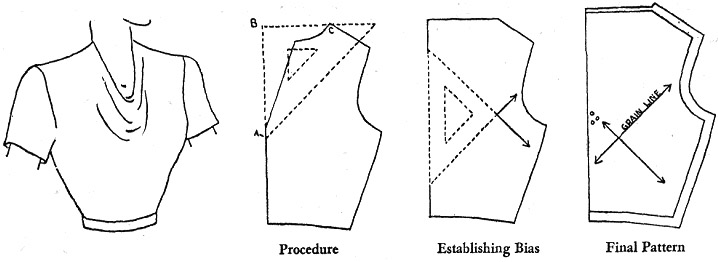
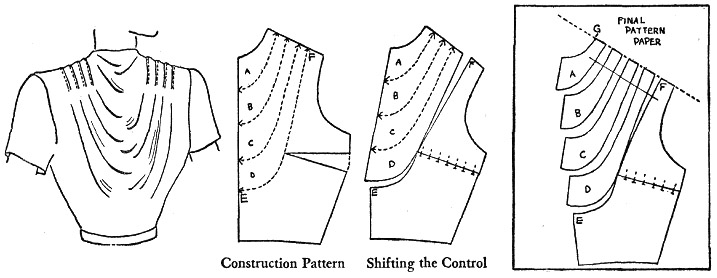
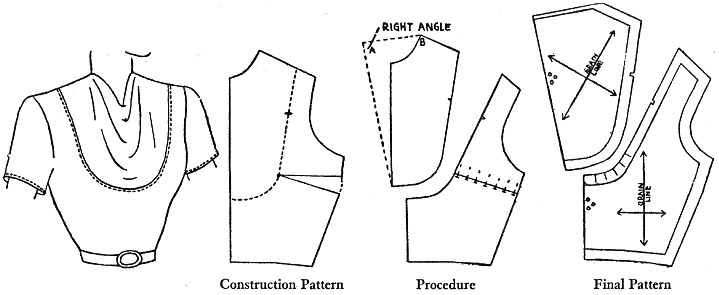
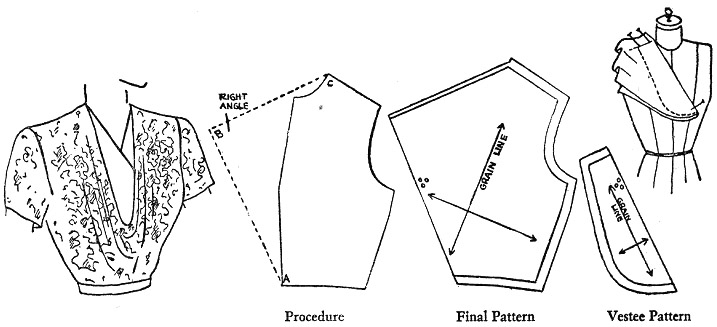
This book goes into incredible detail on constructing patterns from a basic sloper. To give you an idea of how well it shows pattern manipulations, here are several examples of how to modify a pattern to create various types of cowl necklines. I just did this on a jersey kimono top and it took me about an hour using a Threads Magazine tutorial. It was an involved, frustrating process. Next time, I will try one of these:

cowl1cowl2

cowl6 cowl5 cowl4 cowl3

And just one more gushing fangirl inclusion. I have been messing around trying to figure out bra making for my unique figure (broad rib cage, small bust, forward shoulder, etc) since bras have ALWAYS been a problem for me. Without the context of the bodice pattern around it, the bra cups and band are a bit puzzling and easy to screw up. Enter this sense-making illustration:

bratopBless you, Harriet Pepin. Bless you.

Sewing Projects: The Caftan Experiment.

I bought a few yards of black chiffon recently, and wanted to try something relatively simple and low stakes to get a feel for sewing with it. I’m also on the prowl for some kind of fancy-handmade-yet-generic-enough-to-make-en-masse gift for the adult women-folk of the family. A see through caftan might be a bit risque, but it sure beats a generic vanilla bath set. Let’s call it a beachy cover-up, if we must be so prudish.

So this weekend was the trial run.

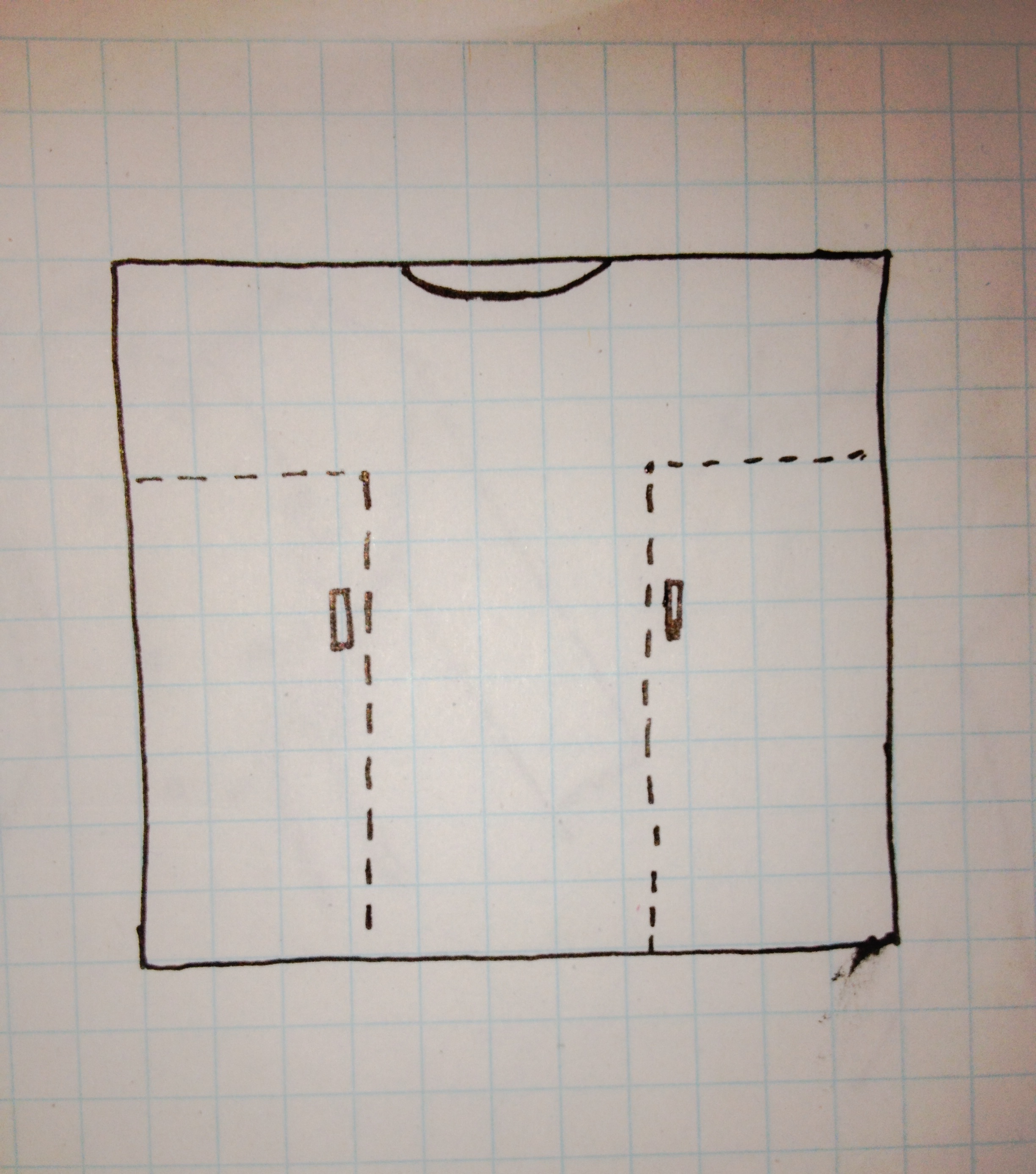
To sew a caftan, theoretically, you really only need a few measurements: the width (measurement from end of arm to end of opposite arm where you want the garment to end), the length (where you want the garment to end), the desired size of your neck opening, where to put the side seams, and where you want to gather or belt in the garment. My highly sophisticated blueprint:

image

When I did this I sewed it in one piece of fabric folded into quarters and a head hole cut from the center, which was, I think, a mistake, because it’s so tricky to hem in this way, and I didn’t want to add a facing to chiffon. Next time I’ll do it in two pieces to make the neckline finish neater, and easier to manage if I try a v-neck. I measured it to end just above the knee but forgot to account for the mathematics of boobies and so it hit a few inches higher on the thigh than I had intended.

Sewing it up was simple enough. I started with hems on the bottom of both sides, sort of out of necessity, because chiffon is a messy beast. It’s also incredibly slidey and I found it tricky to maneuver without seam lines getting all drunk like. Not a big deal on the hems and the neckline but a huge issue when I topstitched down the sides. My moment of genius solution to this was to use tissue paper to draw a stitching pattern and then to pin it to the top of the fabric as a guide and a stabilizer. Then when it’s finished, you just tear it away. Magic!

What I wanted to end up with:

laurelCanyon-020113-bc-005_t650(image credit)

 What I really felt like:

Petrie_original_colors(image credit)

I think the long sleeves and excess fabric below them made it feel more flappy than I wanted. More experimentation to come!

Weekend randomness.

tumblr_mekg62oNcF1qzhou3o1_1280

image credit: Alejandro Melero. borrowed from here

My weekend to do list is a bit excessive, but in a nutshell, the projects and random interests on deck for the next few days:

-sewing a raglan blouse

-working on my manuscript for Yale Younger Poets. I was having weird claustrophobic feelings of my youth slipping ever so quickly between my fingers thinking that 32 was the cut off age and my eligibility to submit was fast evaporating. But no! I have until 40 before I am no longer considered a “Younger” poet by the curatorial folk in Yale publishing. And I also have more years to submit than I thought. Yay! I have sort of let my writing go over the last few months, for a lot of reasons and also because busy. It feels good/anguished/complicated/but yea actually good to come back to with the self-imposed deadline.

-thinking in depth about autism and neurodiversity issues after Seinfeld revealed he believes himself to be on the spectrum. These issues are really important to me, so much so that his revelation aroused such an outburst of enthusiasm in me that I did some reposting with fuck words in my notes with blatant disregard for any bluehaired aunties who follow me on facebook. I think my grandma will understand; she knows I did my time in food service and that I was bound to pick up some naughty language over the years.

-tinkering on my fixer upper Slantomatic 401 to make said raglan blouse. I bought it on a maybe not so wise impulse for $50 on ebay a few months ago, condition unknown, dirty and disheveled but complete with many accessories and cams. Luckily it arrived mostly undamaged, stuffed in a cardboard box with only two musty old thin blankets for protection. Ebayers and their crappy packaging. *shakes head* So I was excited that it ran without a fuss, even though it was caked in greasy grimy gunkiness that makes me think it was stored in some kind of fried chicken restaurant or maybe one of those places on Buzzfeed’s abandoned places lists. So far I have cleaned it, lubricated and oiled it, balanced the tension, used a hair dryer and wd40 to unfreeze the frozen camstack levers, disassembled and cleaned and reassembled the tension assembly, removed and cleaned the balance wheel. Oddly, the old girl is missing the set screw on the chrome knob/clutch/balance wheel, and since the Slantomatic has a different clutch washer than most of the Singers I’ve seen it’s not easy to find a quick replacement. It works pretty well, though I think it needs some usage and more oiling to really smooth things out after being so neglected.

weekend project: forward shoulder adjustment + singer tune up

The last few shirts and suitjackets I’ve made muslins of have been decidedly underwhelming in regard to fit. I’ve never made any shirt that felt truly comfortable, and they always seem less flattering than what I’ve had in mind, at least in the shoulder and back armhole area.

I tried a broad shoulder adjustment which resulted in shoulders that hung off my body in such a way that my actual shoulders were not inside the sleeve shoulder and could not move.

I have tried a sloping shoulder adjustment, which definitely did not work.

I tried adding width to the back bodice piece center back, thinking my shoulders were broader in the back than typical patterns allow for. That messed up the front fit.

My current fit hypothesis: I need a forward shoulder adjustment for my slumping posture, a way of dealing with my broad/weird back, and an accommodation for my broad rib cage/small bust combo. Oh, and my nonexistent waist may come into play also. Phew!

So I found this extremely helpful blog at A Fashionable Stitch by a woman with a similar shoulder issue in the back. I’m not sure if mine is a large shoulder blade, but our body types sound pretty similar and I used her advice (she explains it in detail, but to summarize badly, add to the back of the sleeve, sort of flattening and expanding the curve of the back part of the sleeve cap, and add a bit of extra width to the back bodice in the same armhole area). Since I also have a somewhat broad rib cage I add about half an inch at the bottom part of the armhole (the point where it meets the trunk) and then taper that down almost to my waistline. And magically, on the muslin I recently tried of this, my arms FIT!

I used advice from many sources on the enigmatic forward shoulder adjustment. Interestingly, this doesn’t exist in any of my vintage sewing books, which makes me wonder if it’s a posture issue that has only recently become common due to lifestyle changes in the last, eh, 30 years like large amounts of computer time, texting time, stooping over screens. But I digress. Essentially what I did for this is lay out the pattern pieces with all the pieces touching where they meet and adjust the line of the shoulder seam on all pieces to angle forward. I am adding to the back and reducing from the front. The pattern shape stays the same but the lines move. The armholes also stay in the same place. More on this later, maybe.

So for the weekend I’m going to try a princess seamed simple blouse with all of these adjustments. I’m sewing with a vintage Singer 348 that I bought because it was “owned and perfectly maintained by a professional seamstress” except that apparently she didn’t know how to clean out her bobbin case. It was the dirtiest machine I’ve ever seen. More on this later, too. Anyway, this is her maiden sewing voyage with me, and I’m trying to get a feel for whether she might need a belt replacement. I can’t tell if the slippiness is something I’m not used to because I don’t usually sew on a belt driven machines, or if (as I suspect) the belt is old and not as effective as it should be due to time.

The first step toward recovery is

Admitting you have an addiction. A sewing machine addiction. Complete and utter obsession.

My office could fuel a fashion house.

*searches ebay again*

I fell in love after using a 301 Singer which moved along smooth as silk and made hardly any sound at all. After sewing for six months on a plastic contemporary Brother, there’s just no comparison. So now any vintage Singer under $100 I see represents a writhing, beckoning temptation. The Slant-o-matics were the top of the line (401, 501) and so of course I’ve added those to my hoard. But now the other models with external motors and belt driven mechanisms are becoming interesting too. Not quite as perfect, but I find myself wanting all of them I can get my hands on to explore the idiosyncracies of each.

Current obsession: 300 series. The differences between the 348, the 337/338 and the 327/328. Add to the temptation that they’re various shades of retro gorgeous robin egg blue and seafoam green and it’s just, ugh.

Did I mention the atomic design and the curves and the space program influence visible in the rocket like detailing? How can I resist this:


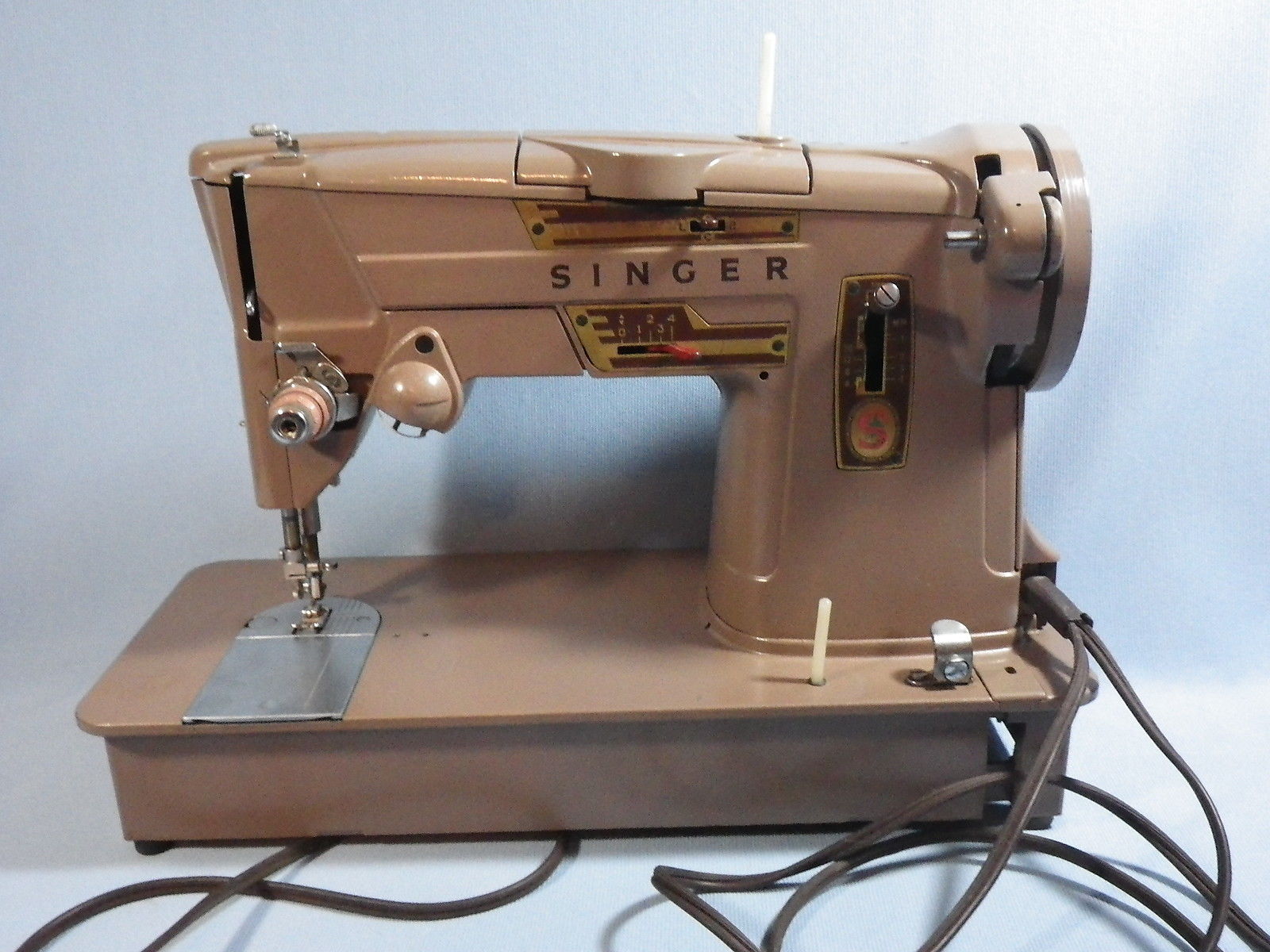
328 k


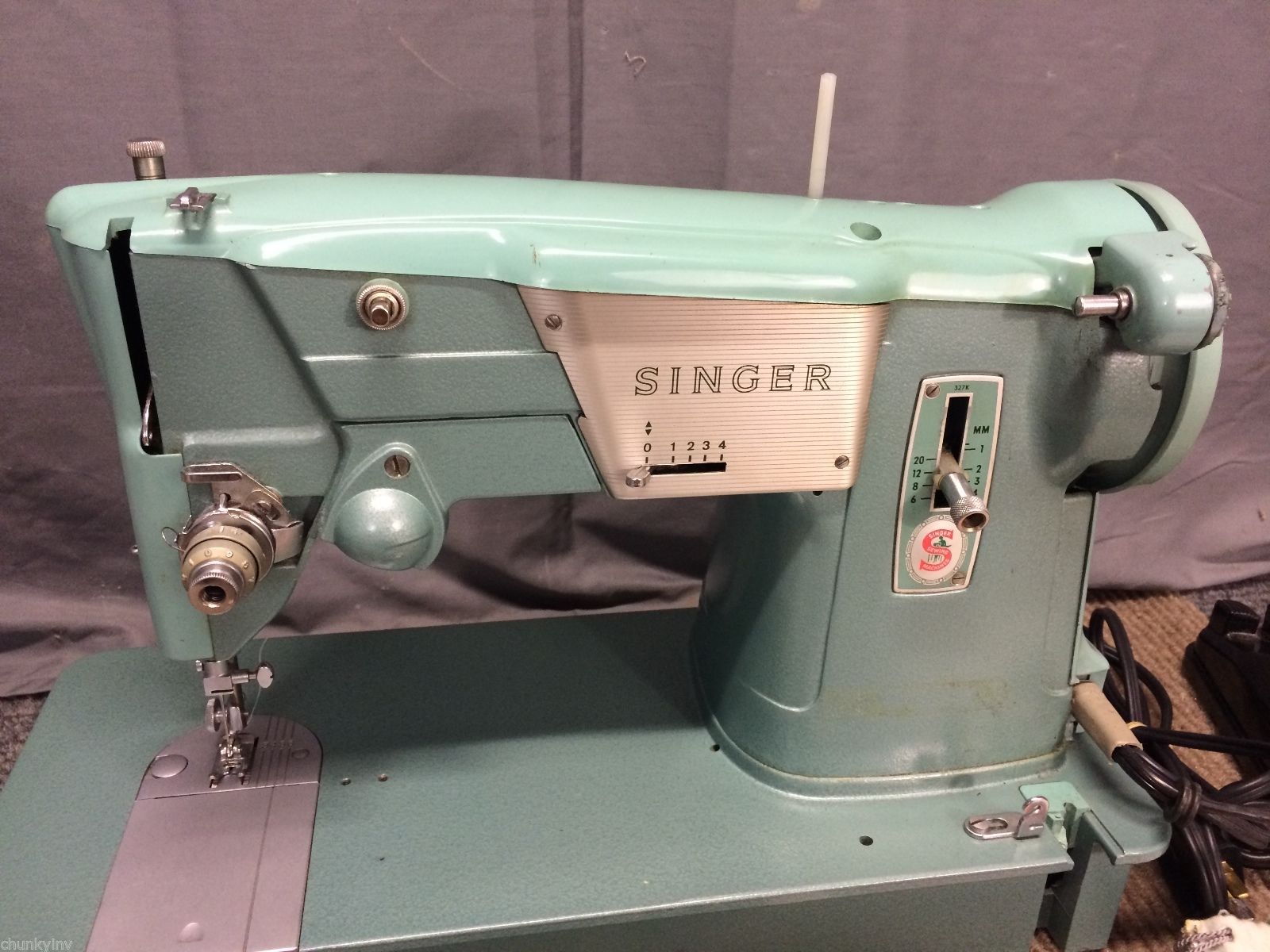
327 k

The top, brownish one is a 328k, designed with similar touches to the Singer 500 series Rocketeer. The bottom little minx is the 327k with similar style lines but a glorious color scheme that might just crack me before her ebay time runs out. (Color and smell are a big deal to me, since the whole sewing experience is motivated for me by the enjoyment of the feels and sounds as much as they are the vague promise of having something wearable in the end. That doesn’t always work out for me because of fitting challenges > my skill level, so it’s good that I enjoy the journey.) Nevermind that I have 9ish floating around my house currently and haven’t sewn anything since getting sidetracked by the sweet, sweet tactile enjoyment of cleaning them out and oiling them. 

I might be addicted to the smell of sewing oil too.

Slant-O-Matic 401 love.

slant2This beauty arrived today. It sews the most consistent, artisanal stitches this sewing noob has ever seen. It’s smooth as butter, even without a servicing, though I will probably take her in for one soon as a courtship gesture in what I’m sure will be a long, intimate relationship between us.

However, having experienced firsthand the wonder of midcentury craftsmanship, I’m afraid my love/hate relationship with ebay will grow only more volatile. I have this dream of fixing up my garage and trying to learn to salvage and fine tune old pieces like this, technohippie that I am, loving both the idea of saving fine work from the landfill and the possibility of doing meaningful work with my hands/elbows/knees covered in grease. Time to start frequenting flea markets again.

What to make to christen her? Something denim with obscene amounts of topstitching, perhaps?

WD40 and Dayquil. What could go wrong?

Battled a headcold AND a sewing machine today. I have a contemporary Singer machine with about 15 stitches and buttonhole function that Santa brought me 8 or so years ago, and which I used at the time to make the world’s shittiest duvet cover. Because I was less than ecstatic about my lackluster abilities it got shoved away somewhere under a stack of books. When I broke it out six months ago, new-again to sewing and more enthusiastic than knowledgeable, I used it until it tightened up, made a horrible squealing noise, and then bound up completely.

Santa had brought me another machine in the interim, because sometimes Santa forgets what he got me years past, but it is a basic Brother with straight stitch and zig zag only, and I live in dread of buttonholes. So I decided to live dangerously and take apart the fancier Singer. Kind of like looking under a car hood. Fear, wonder and puzzlement. Didn’t mess with it much until today, when my weeks of reading about vintage machines and their care made me bust out the WD40, flannel rag and Singer machine oil.

Long story short, I got it to move freely for awhile and thrilled with the sensation of victory, but it’s still not quite right. Put it back together and had three screws left over and a threaded screw-like post that looks as if it’s something important. I was interested to realize its stitch functions are really just built in discs much like the Singer cams of years past.

Was bummed to find that books on sewing machine repair are not very common and more expensive than I can justify when I’m already blowing money on old machines at an alarming rate. I’m fascinated by the mechanics of it all, though. Plastic Singer, you’ve won this round. But I’m gonna be busy, Rocky style, and we’ll rematch soon.

I’m hell bent to learn how to fix up old machines, not least of all because my grandma offered her Touch and Sew, her first major purchase as a married woman, and I have every intention of making that little wonder fully functional again.

Some resources to that end:

TNT Repair website – they have free schematics of a lot of older Singer models as well as helpful information, other resources, etc.

Wefixit Yahoo Group, which is a community of people interested in fixing up older machines.


Open Source Pattern Creation Software: Valentina

Open Source Pattern Creation Software: Valentina

I’m very excited to find this, and will be trying it out soon. Hopefully, eventually, trying to recreate some of Esther Pivnick’s drool worthy vintage patterns described in Fundamentals of Patternmaking, scanned by The Perfect Nose in her infinite generosity toward the sewistsphere. (See her lovely blog for book 1 info and dl link here and book 2 info/link in this post here. Swoon.)


Reading List: May/June 2014

Image

In no particular order:

Virginia Postrel. The Substance of Style: How the Rise of Aesthetic Value is Remaking Commerce, Culture and Consciousness.

Lars Svendsen. Fashion: A Philosophy.

Maya Donenfeld. Reinvention: Sewing with Rescued Materials.

David Braeber. Debt: The First 5000 Years.

Sara Ahmed: The Promise of Happiness.

Simon Reynolds. Retromania: Pop Culture’s Addiction to Its Own Past

Some of it is heavy, some of it is not so much. All of it is connected in my mind in some way to questions of how the crafted surface of the self matters in the world. How style matters, and to what extent the way we present ourselves socially shapes our identity. The system of signification clothing navigates in a world stratified along lines of power/class/gender/culture. I’m also interested in the social consequences of our ideas about consumption and the way we are led to consume despite them.

To illustrate: I get this idea in my head that I’m going to be a better global citizen consumer and start making my own clothes. I really suck at this so far, so I’m burning through a lot of fabric in the process, and I’m sure that has a social/environmental cost I’m happily pushing out of my head. I’m also deluding myself in seeing this as a pursuit of some minimalistic lifestyle, because fabric.com has become my fantasy closet and even though I want to make my own wardrobe that fits well and is an expression of my creativity, when I finally do get to be okay at it, my current, fully functional clothes are going to probably be waste material or donated (not a perfect social solution either). So as part of my challenge to myself, I want to try to incorporate the fabric from my current wardrobe into my as yet nonexistent super fantastical vintage inspired future wardrobe.

While scouring the internet for vintage patterns, I saw a digitized version of a book that described how to make clothes out of cotton sacks. How to unknit a moth eaten sweater and mend it. It was written during WW2 during the lean years when men were gone and Veronica Lake was modeling how to put one’s hair up for factory work. It’s easy forget the historical context that some of my favorite patterns come from, and what women were able to craft out of so much less than what I possess. That fact is humbling, and inspiring, and circles me back around to questions about what humans really need to be creative, to be happy, and what false ideas of happiness and ownership and necessity and normalcy we are fed via ad images and pop culture in order to keep us hungry for more.

(image credit: Van Gogh sketch from here)