Fitting Woes and Effin Slopers.

Grumpycat_meme1

I’ve sewn three slopers in the last two days. The only explanations I had left were a) I’m deformed b) I’m deformed and a terrible measurer or c) I’m deformed, a terrible measurer and I suck at digital drafting.

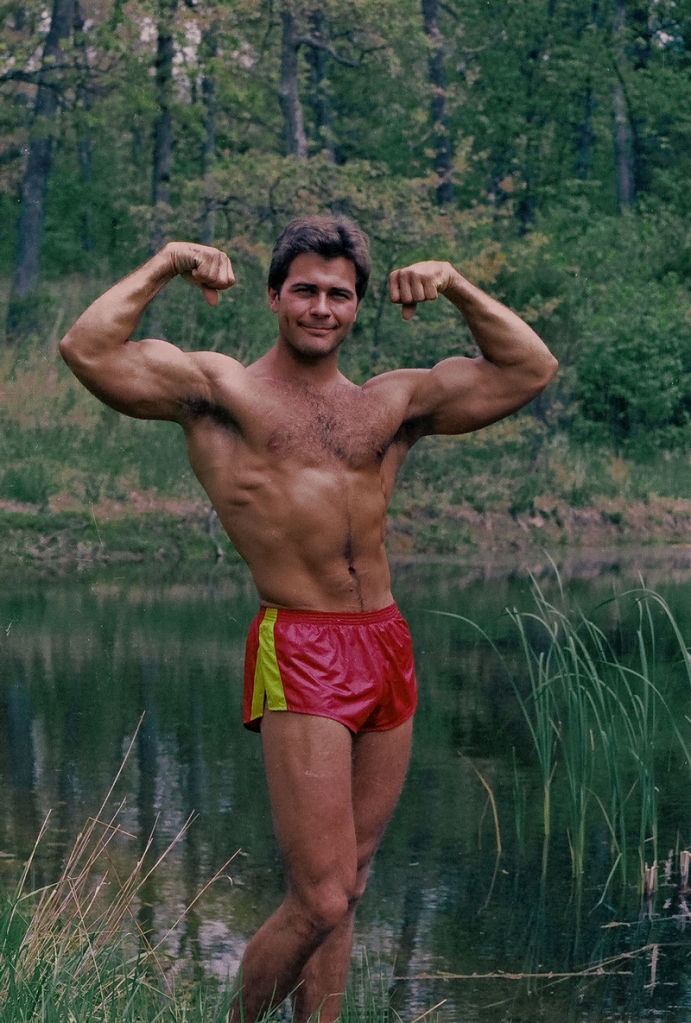
Let me show you why I am deformed. This is my dad:
dadbeingstatuesquelol

Don’t get me wrong, he was the best dad. He was funny and smart and so very, very kind. I miss him every single day, and credit him with what little patience and persistence I have. While my dad’s physique was quite the accomplishment, and while I am, of course, ever appreciative of the glorious blend of Arnold Schwarzenegger-isms and raw egg protein concoctions that comprised my childhood, THOSE BACK PROPORTIONS THOUGH. I inherited those lats, and I curse them every time I sew. (Alas I inherited neither his motivation to be super fit nor his abs, although I do okay–no sugar, healthy eating, etc. I just loathe any exercise that isn’t walking or dancing around my living room like Thom Yorke. Don’t do this barefoot; it’s a good way to break your foot. Ask me how I know this.) Also: my posture plagued my dad. He designed workouts to fix my forward shoulders, which back then I didn’t care about, being a stubborn kid who stooped mostly out of shyness. I still notice myself doing this when the social anxiety kicks in. The combination of broad man back I inherited from a long line of farmer strong brawler folk and my grunge era forward stoop means that fitting a bodice is a nightmare. NIGHTMARE. I also have pretty much no waistline and narrow hips, so that’s not fun when all my vintage patterns are drafted for someone who wore a girdle from age ten. I have been stubbornly fighting with the various pattern fitting possibilities since I began sewing. In the last few days, in a veritable paroxysm of determination, I have tried:

-a forward shoulder adjustment
-a round back adjustment
-a broad shoulder adjustment
-a sloped shoulder adjustment
-lowered armhole
-shoulder seam darts
-neck darts
-drafting a bodice block from my measurements using two different systems

It has been so incredibly frustrating. I can get a block to fit my torso, kind of, using these methods. But as soon as I add sleeves, my broad back renders any forward motion of my arms impossible. The fit is uncomfortable AF. So after the failure of attempt number 3, I broke out the duct tape dress form and tried draping again. I tried this in the past, but wasn’t very practiced, so my results weren’t the best and I sort of let it fall by the wayside. But this time, after all the math and all the frustration, it was easy as pie.

I was going about it all wrong. I’m not deformed; I just have a manbody. And I’m not even that bad at drafting, but all the formulas I was using were based on creating blocks for a much more stereotypically feminine form. The final blocks I came up via draping look way more like this:

mensvest

than anything even vaguely resembling this:

woman's sloper2

and I wonder how many other women with petite, larger waisted, broad backed figures are also making themselves crazy trying to make the formulas work for them when (it would seem) the basic proportions involved are wrong from the start. From now on for myself it’s all man-blocks. I actually had already gone this route for a few pairs of pants, hellbent on not risking the cameltoe look. They work great, actually. And since most of what I want to sew channels Lilith from Frasier and the tailored suit look, blocks designed for men with a slight bust adjustment might be far less of a headache for me.

If anyone else has been through the gauntlet of these particular fitting issues and knows of any solutions, I would *love* to hear about it! I’m also very curious about the theoretical differences in drafting for men vs women. It seems like the tailor / couturier-dressmaker traditions were historically quite separate industries, which I don’t fully understand the reasons for and will have to read up on.  But it seems like the basic methods of drafting should be universal, regardless of the figure? I’m also curious about how many people have fitting problems because of the standard male vs standard female figure used for drafting…


Oh, You Pretty Things: Poiret and the 1910s-20s

Sometimes I have to drown out the ugliness of the world with the beauty of human nature and human works. So this week there have been a lot of kitten videos, avoiding of facebook and beauty for its own sake. Just thought I’d share some of my current happy micro-obsession with Poiret, the art deco fashion illustration of the 20s, and the multiculturally inspired, out-with-the-corset elegance of the 10s. Many of these are Poiret designs, and many are Barbier illustrations.

Free Sewing Inspiration: ABC of Dress by Harry Collins

Oh internet. Daily you force me to confront the best and the worst in humanity. *waits for pizza ordered online thus avoiding the dread and horror of talking to real humans on the phone* Is there a special circle of hell for people who claim to be book lovers and knowledge preservers who just sit back and profit off of some poor publicly funded librarian’s scanning efforts? I would like to think so. (I noticed this book, and many others, from archive.org listed on Etsy, being sold as someone’s own work. The listing *did* make me sit up and take notice of the book’s content, which is a plus, but also depresses/frustrates/enrages me bc there are sellers who just take others’ work and sell it as their own.)

But where was I? OH YES. Art deco 1920s excellence that I wouldn’t have ever found had I not been snarkresearching on this Etsy seller’s stock. This book by Harry Collins called the ABC of Dress is part dressing guide, part dressmaking guide and the illustrations are gorgeous:

Wanna download it? A variety of formats available (here) free of charge, thanks to the indefatigable wonderful folks at archive.org.

Finished Objects: Vionnet Abomination–Er, Attempt–#1

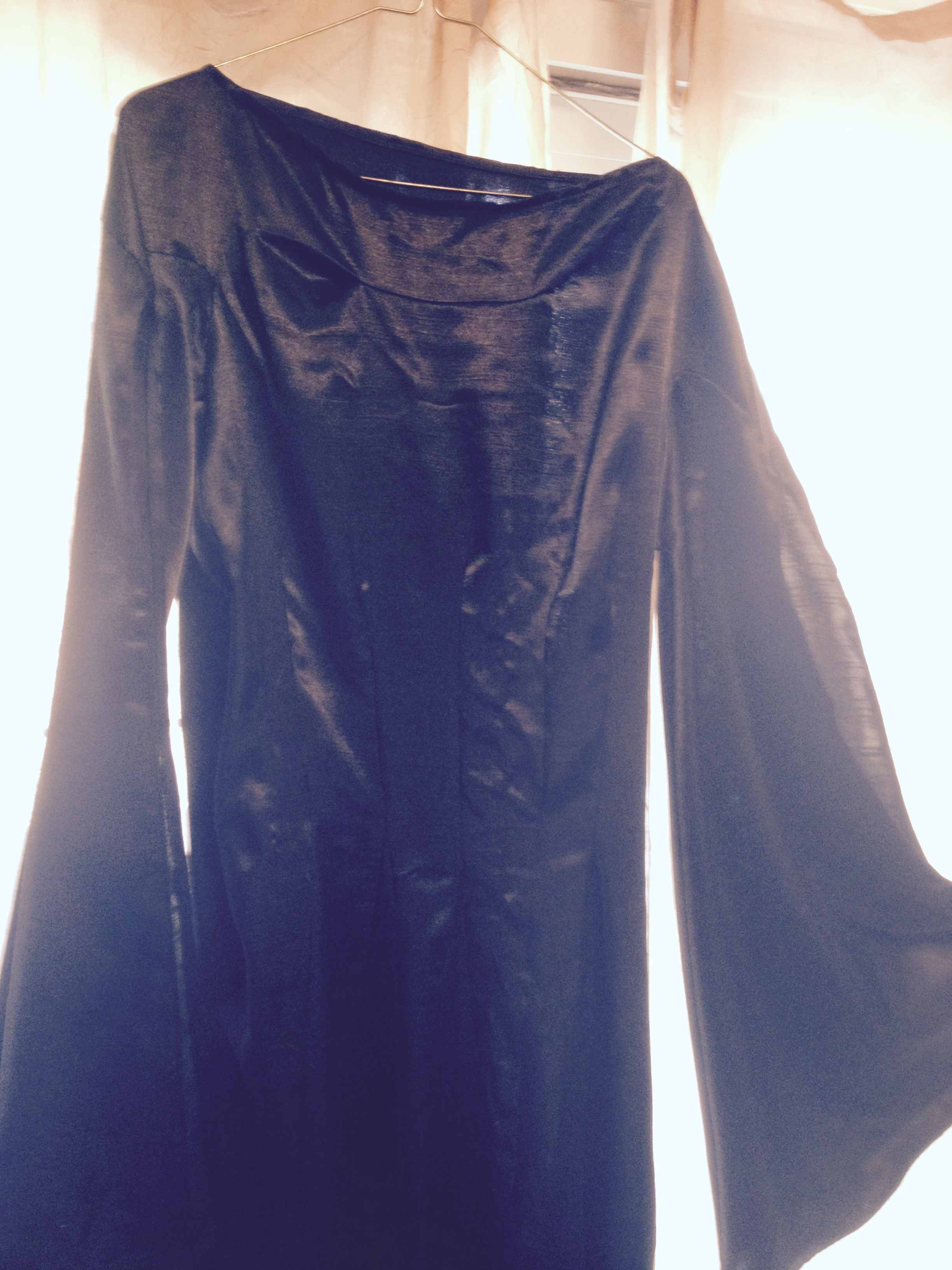
I finished what I have affectionately termed the squid Vionnet, although not to my liking and, as per usual, at the last minute. I spent a month working on digitally drafting the pattern so that I could make an epic Halloween dress, then life got crazy, then I couldn’t get my printer to print the pattern correctly, then time got short and no muslin was made. I used my semi-crappy black $2/yard clearance shantung because I wanted to keep the stakes low but still have a slim chance of resulting in a pretty dress. My measurements of the flat pattern did not translate well into the sewn garment, alas, which necessitated some major gusset type side insertions on the fly. These insertions threw off the lovely hang of the garment, but I used an Old Hollywood trick and corrected the fit on my body, which required some seam ripping myself out of it later. Alas, no pics. (Is it just me or are 30something mothers frequently absent from the photo documentation of family life? Too old / gen x for unabashed selfie taking, and usually too busy trying to make sure the youngun isn’t swinging from the chandelier to actually look in the direction of a camera…)

The squid dress in theory:

vionnet21

pattern
The squid dress in 2d theory.
pattern2
88 pages. This is why I buy sugarcane environmental happy hippie paper by the case.
dress1
The squid dress in post-wear lumpy reality.

dress2

Be it ever so humble, it does represent a moral victory of sorts. I cranked this sucker out in about eight hours sewing time and, had the fit been correct initially, it would have been pretty amazing. It didn’t even disintegrate! So let’s call this a muslin. I love the sleeves. I couldn’t really see it from the pattern pieces, but upon assembly it was essentially a kimono or dropped shoulder sleeve in the front with a horizontal tuck to give the neckline some drape, and a raglan type join at the back.  I plan to reattempt it as a blouse, with slightly less extravagantly eveningwear type Cersei sleeves, because the design itself is lovely. Consider me even more of a Vionnet fangirl after actually trying to sew her pattern.

1930s Fashions: Mode Illustree and Vionnet Designs

modeillustree1

Anyone ever sewn from a Mode Illustree pattern sheet? Wowza. This has got to be a great brain-aging preventative if ever there was one.

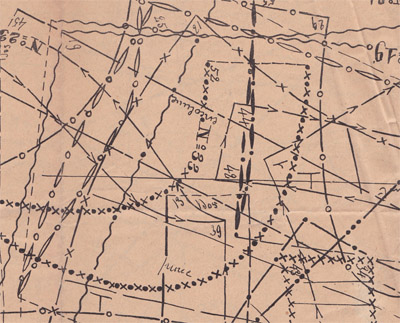
Mode Illustree was a French fashion/home magazine published weekly from the 1859 until at least the 1930s–I haven’t seen any later examples, but they may very well be out there. I was lucky enough to find a few with the original pattern sheets, which are a large sheet with all the pattern pieces traced on top of one another with different lines. A bit of a tangle to wrap the head around. I guess the idea is to trace them onto paper and voila, you have your pattern.

It has taken me roughly three days, but I have finally gotten it drafted (digitally!) to the point of being ready to print it out and test it. The patterns for Mode Illustree are all listed as size 44, which at least in this 1930 version is for a 70cm waist, 94cm bust and 100cm hip (27.5in waist, 37in bust, 39.4ish waist). That waistline is *not* gonna fly, but we’ll see how it goes.

My other current perseverations: pondering the mysteries of the math behind radial grading systems (how does Lutterloh do it??! and how does one create a pattern that can be drafted in this way? *and* how does one blend sizing in this system?) There is a little bit about this in the book The Victorian Tailor but I have been too scattered to really focus on that book like it deserves. And ever since witness2fashion’s wonderful posts on Vionnet, I’m planning on trying a Vionnet (for a Halloween costume wedding reception dress!):

vionnet21

I love so much about this dress. I love it’s Cersei-esque I-will-cut-you style feminity. It’s flowing and feminine without being revealing. Which means a) I won’t be bitterly cold and b) may not even have to worry about shaving my legs and c) I run zero risk of wardrobe malfunction. For a form fitting flowing dress like this, though, some homemade Spanx might be a necessity. But I digress.

This is from The Bunka Fashion College’s book on Vionnet, which gives diagrams that can be enlarged to draft patterns for 20+ designs based off of actual garments. I have vain aspirations of working my way through it to learn everything I can from hands-on practice with her technique, but given my sewing ADD in this post alone, it’s unlikely that will ever happen. (I go from obsessing on 1860s sleeves to 1930s cowls to 1970s tunics over the course of a day. Is there a name for this obsessive interest roulette wheel my consciousness turns on?) But the book is amazing. It’s in Japanese only, but the illustrations are remarkably clear.

The pattern pieces for this one are mindboggling:

isthatyouearlycuyler

I’m looking forward to trying it. Has anyone tried any Vionnet type designs? I’d love to hear about your experiences!

Digitization Issues, or, Text or Image, that is the Question

Been working on the ol’ book hoard. I’m having major issues with image/text readability as I attempt to convert books to formats that are readable but remain  20MB or smaller…This is my best yet solution:

03t06tI’m just curious what other people think of this reproduction style. I think I’ve stared at it for too long. I’m not crazy about the look of the text, but to me I prefer a less pleasurable text block with a fine illustration. Alas, a full color copy of the scans won’t give me a manageable final filesize either…more experimenting to come I’m sure.

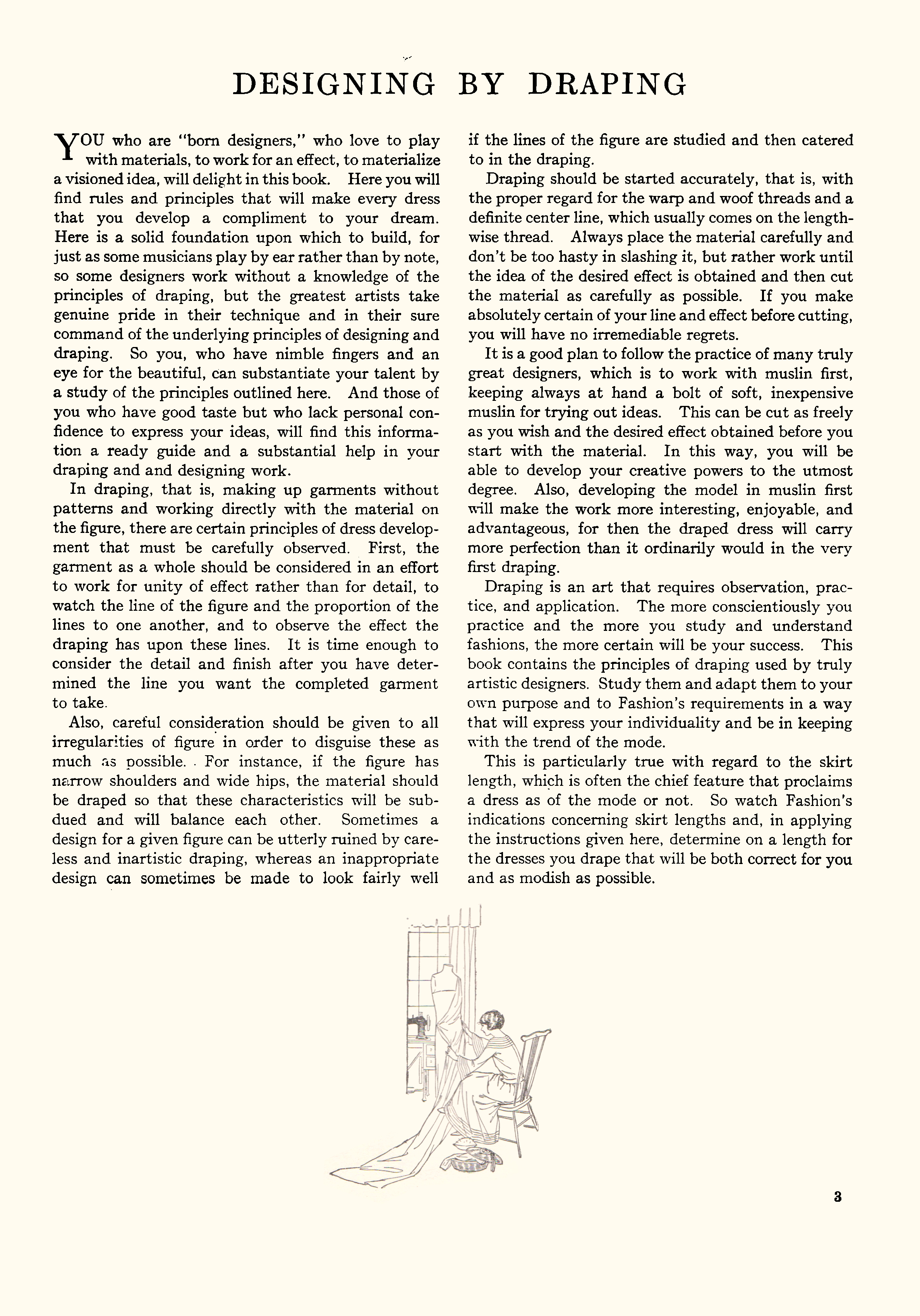
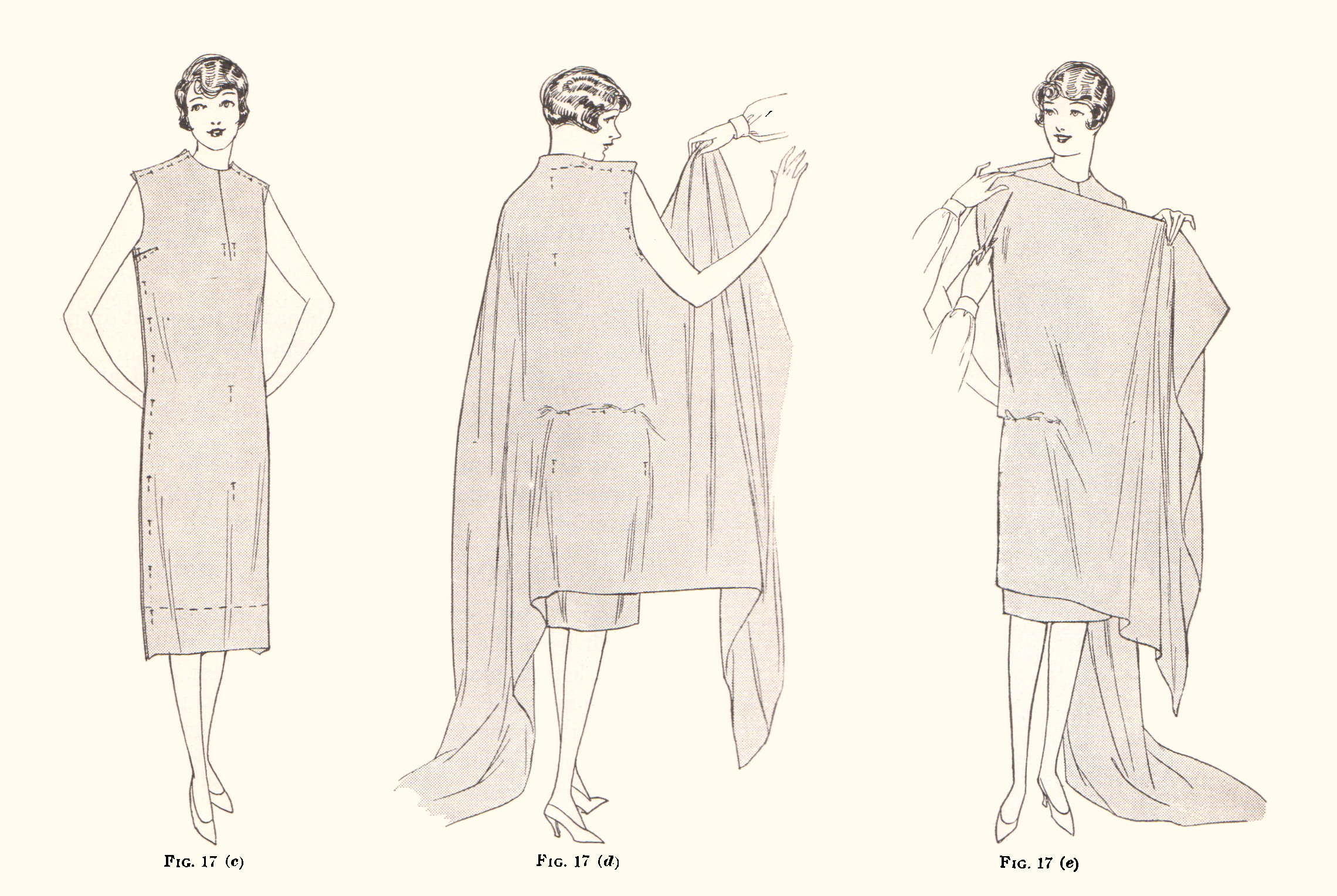
But also just for funspiration–some images from the Woman’s Institute Designing and Draping book, all by Alice Seipp:

aliceseippdraping1 aliceseippdraping3 aliceseippdraping4 aliceseippdraping5 aliceseippdraping6

I used this method on another really rough copy of a book and it worked out great, giving me images like this:

07

*swoon*, right? That is from a Weldon’s Modern Bride–it was full of all these grease spots and totally disintegrating, so I’m totally happy with this. It’s on Etsy, actually–here–along with some of my other recent stuff. Shameless plug, yes? It’s been a good channel to funnel my OCD into I guess.

New Sewing Project: Alice Paul’s Skirt from Iron Jawed Angels

My recent bellbottomy pants turned out fantastic. So excited. I would post pictures but there’s not any possible way to get a good picture of your own pants. It cannot be done. *sigh* Turns out flattening the front and putting the vast majority of the crotch curve on the back pants piece does wonders for the camel toe/monobutt fitting problem. So for my next source of frustration/bafflement I want to make THESE (please excuse the awkward bathtub scene…Gah. Or maybe that’s just my sexual repression speaking):

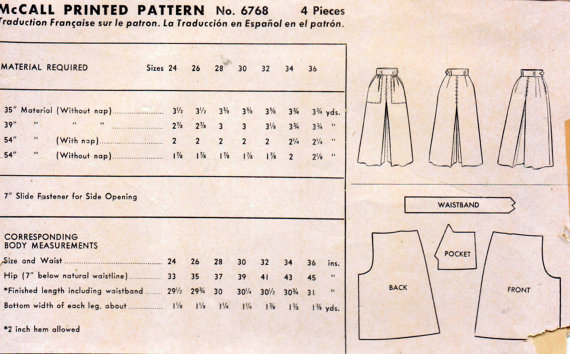
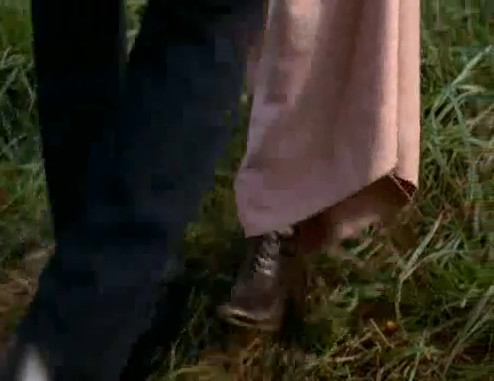
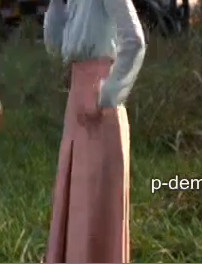
This is Hillary Swank in Iron Jawed Angels rocking some glorious, glorious pink culottes. I love the way they look when she’s in motion, and I *love* the waistline fit. I think there’s a subtle difference to the look of split skirts/culottes vs palazzo pants, so my goal is to get that right. There is a nice pair of 40s culottes on etsy (here) where the skirt is cut in two pieces, with the crotch division sort of grown on the pieces.

mccall6768back

If you wanna see something crazy, watch this tutorial video where a braver sewist than me freehands it (no pattern!) (here). Not quite the tailored look I want, but interesting stuff!

There’s another 70s style pattern with more pieces to cut available on etsy (here)

70sculottesback

I’m thinking these might be better for the skirt illusion, but the last sort of piece of the puzzle for me is the is the box pleat…there is an incredible tutorial to draft a pair to one’s own size with the box pleats (here) at Petit Main Sauvage but the box pleat discussion isn’t quite for-dummies enough for my current sewing level, so I had to try it origami style to get the mechanics of it through my head. And now I’m ready! I swiped some screenshots from the above video to fangirl about the details a bit.

awwwimissromance I love how flow-ey this is, so to preserve that I should probably use a fabric that isn’t too heavy or too stiff. It has a nice way of falling and draping the curves of the leg.hemline

It looks like the hem might be a bit higher on the outside of the leg than in the center, but it’s hard to tell. It might just be the way it’s falling with her movement.
splitskirtfrontside

Not sure if this fit would be so flattering on someone with more of a potbelly (moi) than Hillary Swank, but I do love it here. Very fitted at the waist and through the hip and butt, and then it begins to flare at high mid thigh.

splitskirtyourboxpleatisshowing

Definitely box pleated!

Current Projects: Digitization and the Pictorial Patterns of 1925

These days I’ve been working on my digitization skills. I am a rabid collector of pattern booklets (among entirely too many other things). They are filled with gorgeous illustration and a wealth of inspiration–I love the unique details and trimmings of the 20s, the fluttery chiffons of the 30s. I thought I’d share some images from my May 1924 Pictorial Monthly Fashion Book, which I’ll be making into a pdf and putting on Etsy, if only for other completist/hoarders/rabid OCD fueled types who might want the reference material.

Etsy shops with vintage sewing materials are an interesting phenomenon; I’ve been sort of studying them. Reproduction patterns are a wonderful thing, but I can’t help feeling a bit irked when people charge $12 for a photocopy or scan of a *single* draft-it-yourself Ecoupe Clair pattern. I’m glad there are people who hoard these things and make them available, but my recent purchase of a 20s lingerie “booklet” was just photocopied instructions from a Woman’s Institute magazine, uncredited except as “original source material from 1928.” Not gonna name the particular person because I actually sort of like her, have bought vintage original booklets from her, and I know she’s just making a living and making rare materials available again–but something about it seems off to me somehow. The Amy Barickman books “Vintage Notions” and “Magic Patterns” are similar–just repackaging of Inspiration magazine from the Woman’s Institute and representing the patterns within it in a modern graphic design packaging. It bothers me somehow that someone would claim authorship in such a way of someone else’s incredible work. But at least Amy Barickman did digitize the patterns into a pdf and write her own instructions. I don’t know. When I start offering my own patterns drawn from vintage sources, I intend to be a bit more…forthcoming? less price inflated? about my work as a “pattern designer.” There’s a difference between being a pattern designer and a seamstress/collector with a scanner, in my mind. Is that snarky? Probably snarky. But also true.

But I digress.

These old pattern booklets are hard to find and most of mine wither to the touch with the chipping, brittle edges and cracks. I love to look at them but am afraid to handle them much, so the digitization is a tricky process. Compound that with these being oversized and too large for a single scan and it’s been a delicious little challenge. But these images are gorgeous. 1922-1927 is my favorite pattern illustration era, I think. The 30s might be my favorite in terms of silhouette, but these colors! These textures! These women looking at you with that Cheshire cat all-knowing look in their perfectly fitted ensembles. *swoon*

Enjoy!

pictorialweb1

pictorialweb3 pictorialweb2

Weekend Sewing Project: Palazzo Pants and Secretary Blouses

I’ve been playing librarian all weekend, scanning things and researching pattern publications and catalogs. It’s been a great way to distract myself from this weird cold/sinus thing and to play around learning some image editing software. Getting serious about the Etsy shop idea, as most of the stuff I’ve hoarded collected is just too cool to sit on my bookshelf, and a lot of it is really hard to find, in a fragile state, etc., so digitizing it is a good idea. But reading through so much style awesome all weekend has me sort of paralyzed as far as sewing projects. I want to sew ALL. THE. THINGS.

What’s odd is that I’m somewhat oblivious to contemporary trends. It seems like they tend to emerge more clearly in hindsight, anyway, and I’m not at all interested in trying to fit in with any given moment. It’s more like I’m seeking to craft a style using history as a medium for creative expression by picking and choosing from the great designs of the last century. Cascade-y shirt openings seem like a thing now, and I’m seeing more palazzo style pants in drapey, light fabrics with lots of movement. So that’s cool, I guess. Otherwise it’s a sort of blur of skinny pants and weird shapes in jersey and more skin than I like to expose. *shrug* Not a big fan of jersey clingy things either because they make me feel like a walking lumpy sack of potatoes bulging out where I don’t want to.

Anyway, I need some high waisted 30s style swooshy palazzo pants/beach pajamas in my life. (High waisted pants are the friend of the narrow hipped woman with a large stumpy torso who doesn’t want obvious muffin top. Ahem: moi.) And a secretary blouse with kimono sleeves. And now that I *sort of* can digitally pattern draft, I’m going to work on doing those in a pdf format.

Some images of beach pajamas from the 30s for inspiration:

palazzo1
mccalls-apr1932 palazzo2
Mccall6945 palazzo3
palazzo3

Image sources, clockwise from left: (here), (here), (here) and (here).

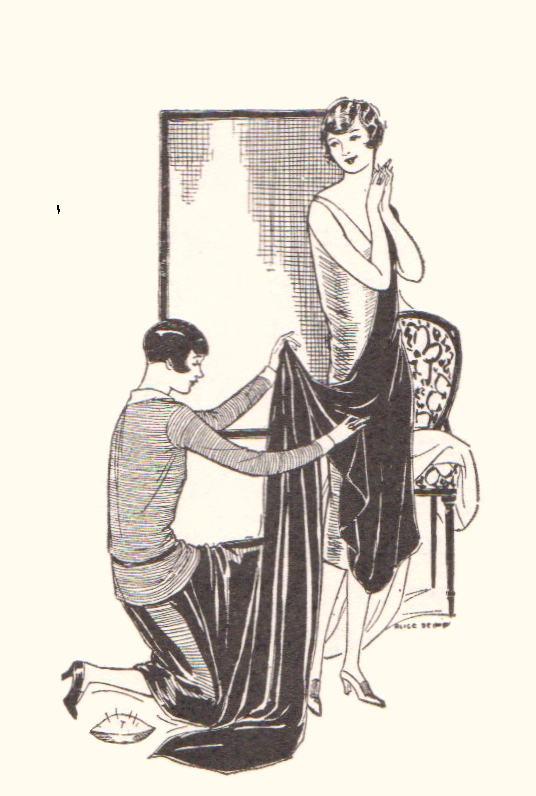
Swoon. I love the ones with a triangular shaped wide waist section (would it be considered a yoke?) in particular. And for the secretary blouse:

Nope, not that Secretary blouse.
Well, sort of, but...
Well, sort of, but…
NOT THAT SECRETARY BLOUSE.
Perfection. In seafoam.

The final photo is from Vince Camuto (here) and definitely has a vintage feel with the front shoulder gathering, and the pants it’s paired with have a nice, light beachwear vibe too. Another possibility is the slightly more fitted weskit style (from Etsy here):

Dita, is that you?
Dita, is that you?

Happy weekend!

Early 20th Century Sewing: Woman’s Institute Course

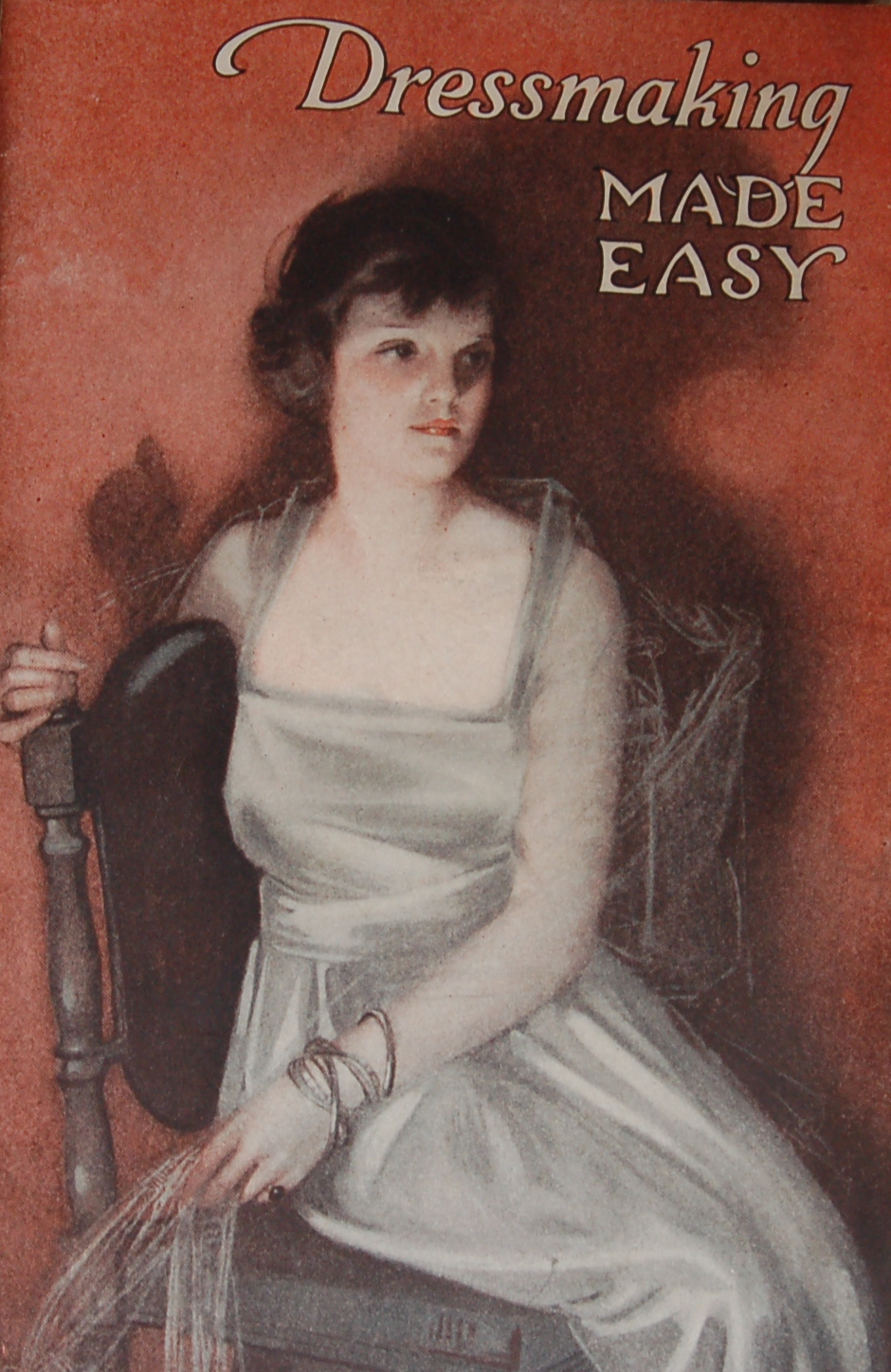
dressmakingmadeeasycoverAs part of my recent obsession with the Woman’s Institute courses and trying to figure out what books are part of which set and how to HOARD THEM ALL, I bought this. I wasn’t sure what it was or how it fit into the series, but it turns out it’s a kind of advertising pamphlet that gives an overview of the WIDAS courses.

Some history of the Institute from the first few pages:

The Woman’s Institute of Domestic Arts and Sciences is an educational institution for women. It teaches dressmaking, millinery, and cookery by the home-study method…

The first student enrolled February 26, 1916, and the number of students is now more than 150,000. No other educational institute has grown to such usefulness in so brief a time; no other renders to womankind so practical and unique a service. It is preparing school girls for useful lives and teaching grandmothers the things they have longed to know but never learned…It copes with cold facts by making one dollar serve for three and reveals anew the virtues of thrift. It teaches helpless hands the useful arts, puts the color tints of joy into dull, drab lives, and gives the humblest home a new vision of happiness. It has ushered in a new dawn for the homes of the nation, a new day in the lives of its womanhood.”

It might sound pompous to modern ears, but given that the sewing machine had only been around for 50-70 years and probably not at all for those without a lot of money to invest in such an high cost appliance, clothes would have been sewn at home, by hand. Women weren’t typically working outside of the home. Suffrage was still a contentious issue. For a woman to learn a trade that could provide an income and some independence would have been huge. HUGE.

The booklet explains that there were two courses of instruction offered by their Department of Dressmaking and Tailoring:

Complete Dressmaking and Tailoring (with Drafting and Tissue Paper Patterns)

Dressmaking (With Tissue Paper Patterns)

The dressmaking course was designed for women who want to learn to sew for home use, for themselves, with pre-made patterns.  The course in dressmaking and tailoring was intended for those who wanted a complete knowledge of sewing, dressmaking, tailoring and drafting and was intended as a comprehensive education that would serve the woman seeking to design her own garments and pursue professional work as a sewist. The booklets for each course would have been sent in the mail in order, as the lessons are intended to build upon each other.

For the Dressmaking with Tissue Paper Patterns course, the following 25 booklets would have been sent (order is my best working guess; I intend to keep researching until I get this figured out!):

1 and 2. Essential Stitches and Seams (2 parts)

3 and 4. Tissue Paper Patterns (2 parts)

5. Plain Dressmaking

6. Tight Linings and Bonings

7. Laces, Silks and Linens

8 and 9. Embroidery Stitches (2 parts)

10. Plain Undergarments

11. Harmony of Dress

12. Woolen Materials and Tailored Plackets

13. Skirts

14 and 15. Tailored and Lingerie Blouses (2 parts)

16 and 17. Dresses (2 Parts)

18. Tailored Pockets

19. Tailored Buttonholes and Buttons

20. Remodeling and Renovating

21. Maternity and Infants’ Garments

22. Children and Misses’ Garments

23. Miscellaneous Garments

24. Ribbon Trimmings and Flowers

25. Tailored Suits, Coats and Capes

The Complete Dressmaking and Tailoring Course with Drafting and Tissue Paper Patterns would have included 38 lessons (order is my guess):

1 and 2. Essential Stitches and Seams (2 parts)

3 and 4. Tissue Paper Patterns (2 parts)

5. Pattern Drafting

6, 7, 8 and 9. Drafting and Plain Dressmaking (4 parts)

10. Corsets and Close Fitting Patterns

11. Tight Linings and Bonings

12. Laces, Silks, and Linens

13 and 14. Embroidery Stitches (2 parts)

15. House Aprons and Caps

16. Fancy Aprons and Sunbonnets

17. Patterns for Underwear and Lingerie

18 and 19. Underwear and Lingerie (2 parts)

20. Harmony of Dress

21. Woolen Materials and Tailored Plackets

22. Tailored Skirts

23. Patterns for Blouses and Dresses

24 and 25. Tailored and Lingerie Blouses

26 and 27. Dresses (2 Parts)

28. Tailored Pockets

29. Tailored Buttonholes and Buttons

30. Remodeling and Renovating

31. Patterns for Children and Misses Garments

32. Maternity and Infants’ Garments

33. Children and Misses’ Garments

34. Ribbon Trimmings and Flowers

35. Miscellaneous Garments

36. Patterns for Coats and Capes

37. Tailored Suits, Coats and Capes

38. The Dressmaker and Tailor Shop

This would have been a complete list as of 1921, though there appear to be other very rare drafting and draping related booklets around. I’m collecting them and trying to assemble a full set of all of the home study materials (millinery, you’re next!). They’re filled with gorgeous illustrations:

gownshop

I’m considering scanning them and listing pdf copies on Etsy, not because I want or expect to fund my retirement and buy an island with proceeds from them (ha!), but because if I’m obsessed with 1920s/30s fashion, I’m sure other people are too, and these books are a great resource. Buuut paying $100 or more for a rare edition is a bit cost prohibitive, yes? It would be fun to work through them all. Even more so to start an online sewing circle to do so together. Please let me know if you’re interested–I might just be a lone obsessive shuffling through sewing ephemera, but these books are pretty amazing.

There are gorgeous hardback versions and another 4 volume dressmaking library by the Institute as well–more on those as I figure out if they’re just repackaging of the same information in different format or what the relationship is.